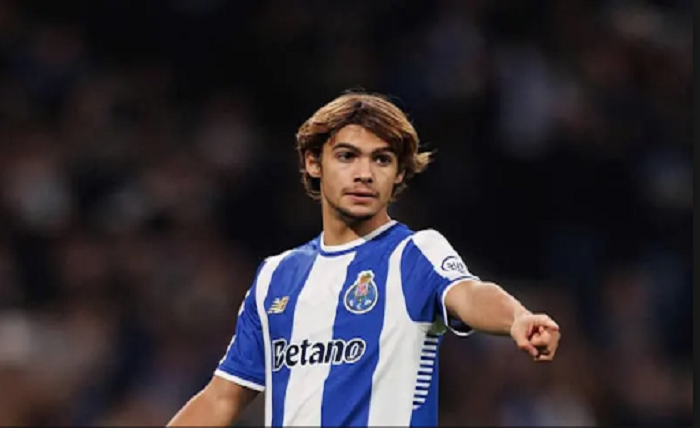
Rodrigo Mora represents a generation of Portuguese attackers whose technical development has accelerated through unusually early exposure to professional football. The midfielder established himself at Porto before completing a permanent move to Roma in August 2026. His creativity, close control, and intelligent movement offer compelling reasons to examine his performances beyond goals and assists, see more at b29 now!
Rodrigo Mora – A Young Portuguese Playmaker With an Unusual Career Timeline
The Portuguese attacking midfielder was born on May 5, 2007, and developed through Porto’s academy after joining in 2016. His progress became particularly noticeable when he entered professional competition with Porto’s reserve side at just fifteen years old.
That early introduction required him to process defensive pressure considerably faster than most players progressing through conventional youth pathways. By September 2024, his development had earned him a debut for Porto’s senior team and greater expectations.
His subsequent performances established Rodrigo Mora as a genuine attacking contributor rather than a young player receiving occasional opportunities. Across eighty senior appearances for Porto, the midfielder recorded sixteen goals and six assists before leaving Portugal in August 2026.
Roma subsequently invested in his technical potential, introducing him to Italian football under a tactically demanding coaching structure. The following table summarizes the essential information needed to understand his professional background and progression.
| Category | Player information |
| Date of birth | May 5, 2007 |
| Birthplace | Matosinhos, Portugal |
| Nationality | Portuguese |
| Height | Approximately 168 cm |
| Preferred foot | Right |
| Primary position | Attacking midfielder |
| Alternative position | Left-sided attacking midfielder |
| Youth club | Porto |
| Professional reserve debut | January 2023 |
| Porto senior debut | September 2024 |
| Porto senior record | 80 appearances, 16 goals, 6 assists |
| Transfer to Roma | August 2026 |
| Roma shirt number | 86 |
| International background | Portugal youth national teams |
Porto’s youth development emphasized technical control, attacking combinations, and positional understanding, which became visible throughout the midfielder’s early performances. His professional experience subsequently introduced physical challenges that required quicker decisions and greater awareness of opponents approaching from behind.
Career Stages That Explain Mora’s Development as an Attacker
Rodrigo Mora developed through three competitive stages that reveal how technical ability becomes effective against increasingly experienced opponents. Each stage introduced different tactical responsibilities, from receiving possession in crowded areas to influencing matches through decisive attacking actions.
Porto Academy Training Developed His Close Control and Awareness
- Porto’s academy encouraged the young midfielder to recognize passing angles before receiving possession in tightly contested central areas.
- His early technical education emphasized coordinated movement because attacking combinations become ineffective when teammates occupy overlapping spaces.
- Rodrigo Mora developed confidence carrying possession through midfield while keeping the ball sufficiently close to evade immediate challenges.
- Youth competition allowed him to practice receiving on the half-turn and identifying defenders approaching from his blind side.
- His attacking responsibilities expanded as coaches recognized that his acceleration over short distances helped create passing opportunities.
- Porto’s structured training environment also required the prospect to support defensive transitions after his team surrendered possession unexpectedly.
Early Professional Appearances Tested His Ability Against Experienced Defenders
- The midfielder entered Porto’s reserve team in January 2023, becoming the youngest professional league debutant in Portuguese football.
- His first senior experiences demanded faster passing decisions because opponents immediately punished unnecessary touches near the midfield line.
- Physical defenders frequently attempted to restrict his turning space, forcing him to use body positioning and intelligent movement.
- Rodrigo Mora benefited from reserve football because regular challenges exposed weaknesses that youth opponents could not consistently exploit.
- Porto’s first team eventually introduced him during September 2024, creating opportunities to demonstrate his attacking intelligence at higher levels.
- His emergence showed that technical ability needed support from tactical discipline, positional awareness, and consistent decisions under pressure.
Goals at Porto Established His Reputation Before the Roma Transfer
- The attacking midfielder became increasingly influential during the 2024–2025 season as his finishing complemented his passing combinations.
- His performances against Portuguese league opponents demonstrated an ability to arrive inside the penalty area without remaining permanently advanced.
- A goal against Estoril Praia during March 2025 further highlighted his growing confidence in decisive attacking situations.
- Rodrigo Mora completed eighty senior Porto appearances with sixteen goals, demonstrating measurable productivity before transferring to Italian football.
- Roma secured his permanent signing in August 2026, providing a new challenge within a more tactically demanding domestic league.
- The transfer reflected recognition of his attacking output and potential to occupy several advanced positions within Roma’s structure.
A Tactical Examination of His Creativity and Areas for Improvement
The most revealing aspect of Rodrigo Mora is his ability to identify useful attacking spaces before defenders recognize the developing situation. His performances are best assessed through ball reception, progressive movement, finishing decisions, and the defensive work required between possessions.
Receiving Between Defensive Lines Makes His Attacking Movement Dangerous
- The Portuguese playmaker frequently seeks positions behind opposition midfielders because those spaces provide direct access to advanced attacking combinations.
- His first touch can redirect possession away from approaching defenders while preserving the opportunity to play forward immediately.
- Rodrigo Mora creates problems when he receives facing the opposition goal with nearby forwards already making coordinated runs.
- Defenders must decide whether to challenge him directly or protect passing channels toward the center forward.
- His ability to change direction within limited space can create temporary numerical advantages against compact defensive formations.
- Roma can use these qualities when midfield possession needs a creative connection between deeper distributors and advanced attackers.
Dribbling and Final Passes Reveal His Technical Attacking Identity
- The midfielder uses short touches and rapid directional changes to retain possession when opponents attempt aggressive individual challenges.
- His right-footed control becomes particularly useful when starting from the left before moving toward central shooting positions.
- Successful dribbling creates value when he immediately recognizes the unmarked teammate produced by an opponent’s defensive movement.
- Rodrigo Mora must balance individual progression with early distribution because excessive touches can allow defenders to recover.
- His passing choices are most productive when attackers coordinate diagonal runs across the defensive line ahead of him.
- The young creator also benefits from receiving near the penalty area, where one accurate combination can produce a scoring opportunity.
Italian Football Will Measure His Defensive Discipline and Consistency
- Roma’s tactical demands require attacking midfielders to press opposing defenders while maintaining coordinated distances from their nearest teammates.
- The Portuguese youngster must recognize when to challenge a ball carrier and when to protect a dangerous passing route.
- His relatively compact physique makes body positioning essential when facing taller opponents during contested midfield possession.
- Rodrigo Mora can improve his effectiveness by anticipating second balls and reacting immediately when attacking combinations break down.
- Reliable performances will require sustained concentration because Italian opponents frequently exploit individual mistakes during organized defensive transitions.
- Greater consistency in pressing, finishing, and decision-making could increase his opportunities to influence demanding league and European matches.
Conclusion
Technical ability creates opportunities, but sustained performance determines whether a promising attacker becomes central to his team’s plans. Rodrigo Mora has already demonstrated unusual maturity through early professional appearances and productive seasons with Porto. His transfer to Roma introduces stricter tactical expectations and stronger defensive opposition, access the B29 link (link b29) now!